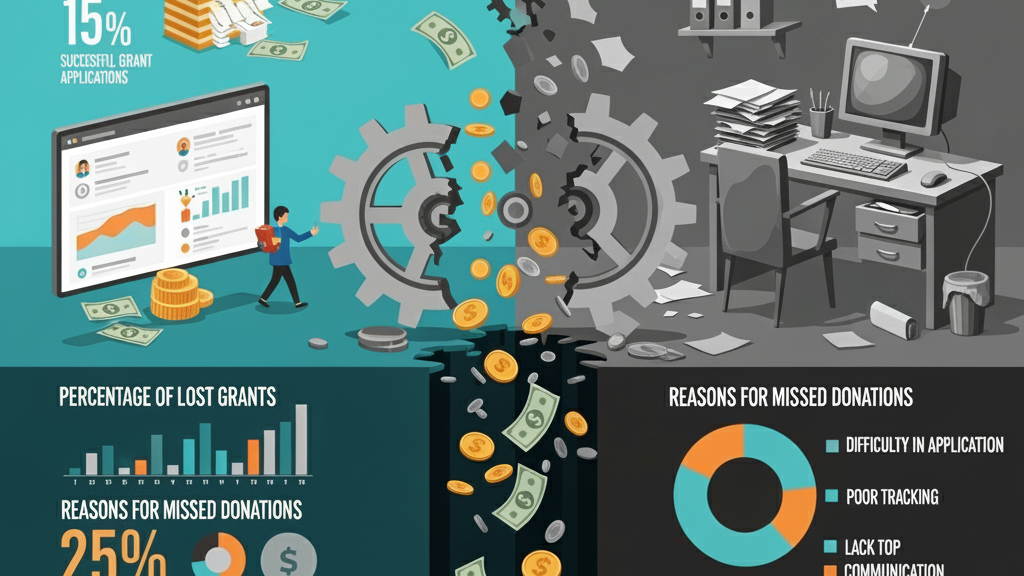
Salesforce NGO Cloud for Grants & Fundraising: A Data-Powered Call to Action Every Nonprofit Leader Must Hear
The nonprofit sector stands at a pivotal moment. The stakes have never been higher: donors demand transparency, funders expect measurable


From the early 2000s to now, I’ve been the person you call when your CRM buckles under quarter-end pressure, your ERP is not optimized or txn refuses to hit the GL, or a gnarly business problem needs an apps-first solution. My value—and the value of an entire generation—was scarce knowledge: platform quirks, integration lore, and the muscle memory of debugging at 2 a.m. Scarcity commanded a premium and built careers.
Fast-forward to 2025. Type a prompt and a “co-worker” answers in seconds—explaining a product, generating code, even scaffolding an app. Vibe coding is real; AI self-coding isn’t sci-fi. Knowledge—once our moat—is now a feature. And moats made of features drain fast.
This AI frenzy isn’t the dot-com sequel. Back then, the internet created more knowledge jobs. This wave will compress them. Yes, it will mint a new ultra-rich class. It will also push many mid-career specialists to ask: What’s my edge when everyone can ask the same model?
So what actually wins from here? Here’s my blunt take, shaped by two decades in the trenches.
The premium shifts from what I know to what I can assemble into something new. Tools are abundant; orchestration is rare. The best builders treat AI like a bandmate—jamming toward outcomes, not writing perfect sheet music. Think beyond code: as humanoids enter homes and workplaces, the real value won’t be their firmware; it’ll be the ecosystem—skills, services, upgrades, and experiences around them. (If you watched Elon Musk’s “Mars Game Plan,” you know the ambition. I expect to see robots on rooftops here before they’re mounting trusses on Mars. Link: https://www.youtube.com/watch?v=0nMfW7T3rx4
Most roadmaps still say “add feature, launch dashboard, celebrate.” Irrelevant. Stop Shipping Features. Automate the Whole Job. Leaders should pursue end-to-end, no-login workflows where the outcome is the product. If a user has to log in, copy-paste, or re-enter data, you left value on the table. The bar: hyper automation across the process—not a shiny knob on step three.
We’re drowning in agents, “agentic platforms,” and micro-tools. That fragments value and bloats TCO. The market will consolidate into AI suites that sit natively integrated with ERP/CRM backbones. Early signals: growing ecosystems around ChatGPT, Perplexity’s Comet, and GitHub’s MCP server registry. Design for that future—composable, governed, enterprise-grade—rather than duct-taping bots. Comet: https://www.perplexity.ai/comet/ MCP Registry: https://github.com/mcp/github/github-mcp-server
Your work should happen automatically through your tools of communication—WhatsApp, emails, video conferences, and Slack. With agents like Fireflies.ai attending meetings for you, manual tasks like updating sales opportunities will become a thing of the past. Your agents will handle the pipeline cadence; you will focus on the relationships. I predict that in 5-10 years, we’ll be mostly talking to our applications, not typing in front of a computer.Fireflies: http://www.fireflies.ai
Billions of dollars will be spent chasing large enterprises and look good doing it. But I see a huge, underserved opportunity in bringing the power of AI to Small and Medium-Sized Businesses. According to the U.S. Small Business Administration, SMBs make up over 99% of all businesses in the country. Just look at how Nextiva (http://www.nextiva.com) established a massive market by focusing on this group. The same opportunity exists today with AI. My strategic bet would be to focus small to grow large.
AI—and eventually AGI—will make life more luxurious and sophisticated, and also more ignorant if we outsource too much thinking. If you enjoy speculative mirrors, Dan Simmons’ Ilium/Olympos duo offers a cautionary lens. Overview: https://portiabridget.wordpress.com/2016/07/12/olympos-ilium-02-by-dan-simmons/
The real question isn’t “How fast can we adopt AI?” It’s: What do we, as leaders, choose to build when knowledge itself is cheap?
The end of the knowledge worker isn’t the end of work. It’s the end of hiding behind expertise. The next decade belongs to leaders who combine creativity, orchestration, governance, and taste—to deliver outcomes that feel inevitable.
Share your critiques and perspectives. If you want to explore adoption paths that unlock value: https://calendly.com/smdharan/15min
The nonprofit sector stands at a pivotal moment. The stakes have never been higher: donors demand transparency, funders expect measurable

The arrival of AI agents is quietly but firmly changing the way we work. Imaging that you’re in a meeting,